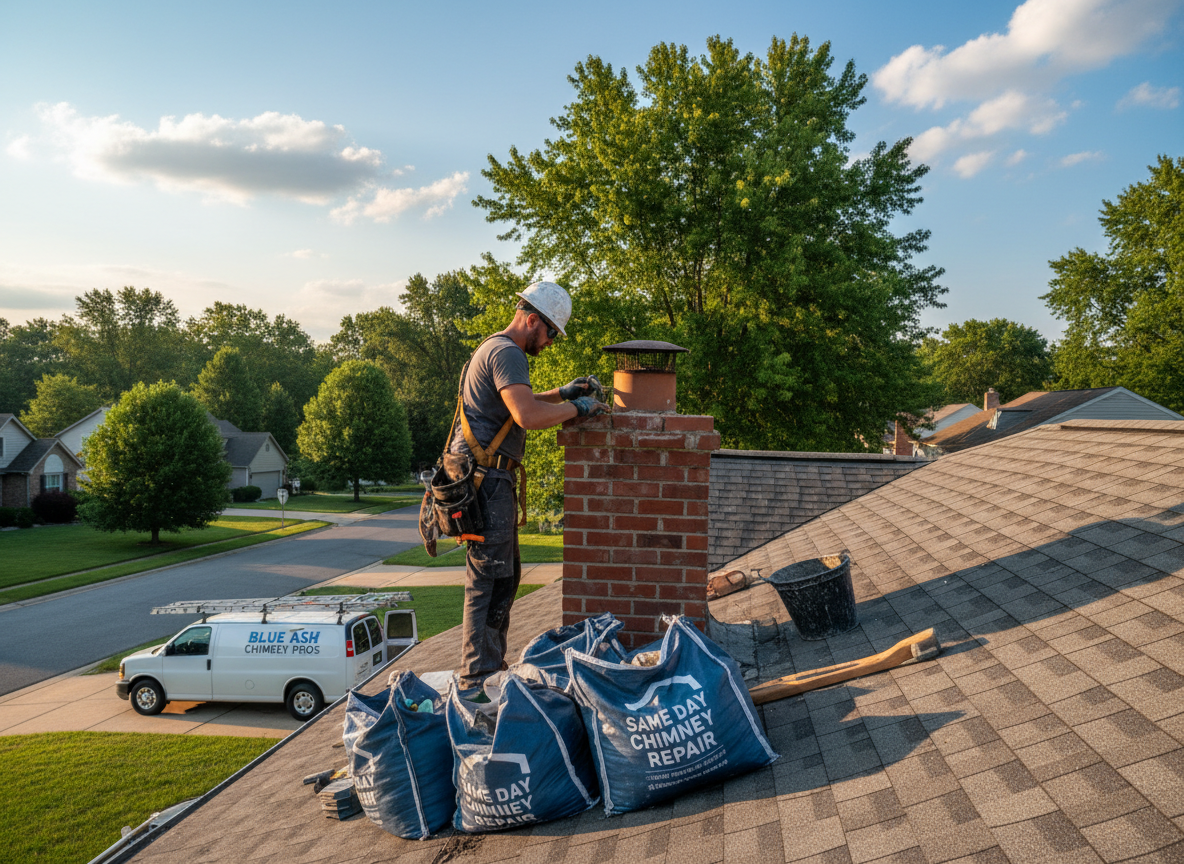
Blue Ash homes built in the 1950s through 1970s along streets like Plainfield Road and in neighborhoods near Montgomery often feature masonry chimneys with clay tile liners. These older flues develop hairline cracks from repeated freeze-thaw cycles common in southwest Ohio winters. When a crack allows water to reach the brick, the damage can spread quickly enough that a same-day visit prevents interior staining or carbon monoxide risks during the heating season. Technicians carry refractory mortar and stainless steel liners sized for the common 8-by-8 and 8-by-12 flues found in these houses.
Heavy spring rains in the Blue Ash area frequently expose crown deterioration that homeowners notice only after water stains appear on ceilings. Same day repair crews arrive with pre-mixed mortar and flashing kits matched to local roof pitches, sealing the crown and installing new step flashing where the chimney meets asphalt shingles. Delaying even one night can let additional moisture reach the attic insulation, turning a flue repair into a larger moisture remediation job.
Code requirements in Hamilton County call for proper clearances and approved liner materials whenever a chimney is opened. A same day crew verifies the smoke chamber condition and confirms the damper operates freely before leaving. Homeowners are advised to keep the firebox clear of stored wood until the mortar has cured, usually 24 hours in moderate temperatures.
Technician insight
In Blue Ash, the thing that catches most people out with same day chimney repair is how fast water from spring storms travels through hairline cracks in the crowns of 1960s brick chimneys along Plainfield Road, turning a small leak into attic damage overnight when temperatures swing.
Water Leak After Spring Storm
A homeowner in Blue Ash noticed ceiling stains after heavy rain. Inspection showed a cracked crown on a 1968 masonry chimney allowing water past the flue. The crew sealed the crown with refractory mortar and added new flashing the same afternoon. No further leaks occurred during the next rain.
How it works
- 1
Phone Assessment
Gather details on symptoms, home age, and recent weather to prepare the right materials before dispatch.
- 2
On-Site Inspection
Check crown, flue, and smoke chamber for active leaks or blockages while confirming safe access.
- 3
Targeted Repair
Apply mortar, replace damaged liner sections, or seal flashing using products suited to Blue Ash masonry.
- 4
Final Safety Check
Test draft, verify clearances, and walk the homeowner through the completed work.
Pricing
Upfront quote after inspection; cost driven by extent of liner or crown work required.