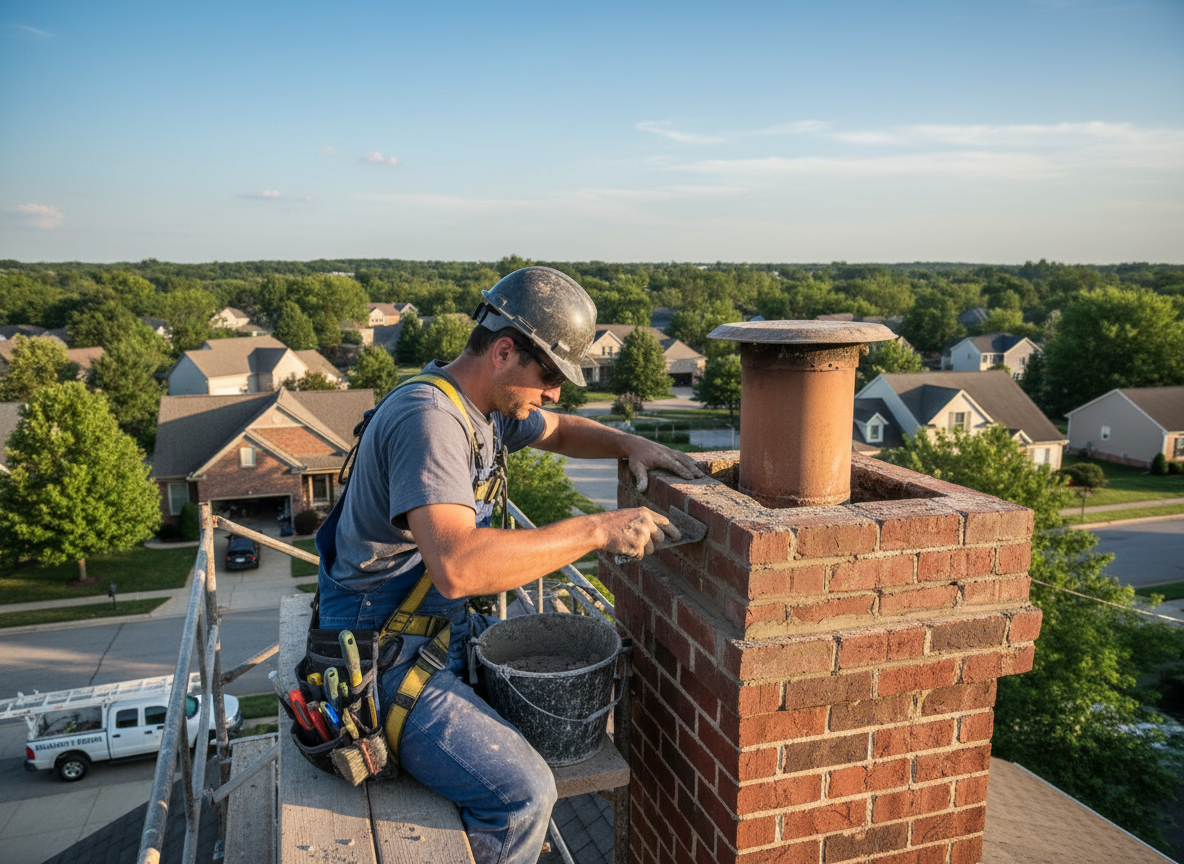
Blue Ash sits in Hamilton County where many homes built between the 1950s and 1970s feature masonry chimneys that now show mortar joint erosion from repeated freeze-thaw cycles. Winter temperatures drop below freezing while daytime thaws allow water to seep deeper into the brick, widening cracks that eventually let moisture reach interior framing. Peak Wrench technicians at 9000 Plainfield Rd routinely see crown spalling and loose flue tiles that worsen during the spring rains common across the Cincinnati metro.
Flashing around the chimney-to-roof transition fails faster here because many Blue Ash roofs carry asphalt shingles installed over original cedar that have been replaced multiple times without updating the step flashing. When water tracks behind the flashing it saturates the sheathing and can travel into second-floor ceilings in split-level and two-story colonials common along Plainfield Road and surrounding neighborhoods. Repair work must address both the masonry and the roof interface to stop the leak path.
Technicians check for carbon monoxide risks when liners are cracked because older Blue Ash homes often retain original unlined flues connected to furnaces or fireplaces. Proper repair includes cleaning debris, repointing with type-N mortar matched to existing brick, installing a new precast or cast-in-place crown, and sealing the flue if needed. All work is performed from the 24/7 dispatch at the Plainfield Road shop so crews can respond the same day when heavy rain is forecast.
Technician insight
In Blue Ash the thing that catches most people out with professional chimney repair is hidden water damage behind the flashing on split-level homes built in the 1960s around Montgomery and the Plainfield corridor. The freeze-thaw cycles here push moisture deeper than homeowners expect, so the leak often shows up two floors down from the chimney itself.
Recurring Leak After Heavy Spring Rain
Homeowner in Blue Ash noticed ceiling stains after several days of rain. Inspection showed deteriorated crown and failed step flashing on a 1968 split-level. Crew rebuilt the crown, repointed the upper six courses, and replaced the flashing. No further water entered during the next heavy storm.
How it works
- 1
Site Inspection
Technician climbs to the roof and examines crown, mortar joints, flashing, and liner condition from both inside and outside the home.
- 2
Damage Assessment
Findings are documented with photos and explained on site, including any hidden water tracking into attic or ceiling areas.
- 3
Repair Execution
Mortar is removed and repointed, crown is rebuilt or sealed, flashing is replaced or reset, and liner issues are corrected.
- 4
Final Check and Cleanup
Water test is performed, debris removed, and homeowner walks through the completed work before the crew leaves.
Pricing
Upfront quotes provided after inspection; price varies with height, liner condition, and extent of water damage.