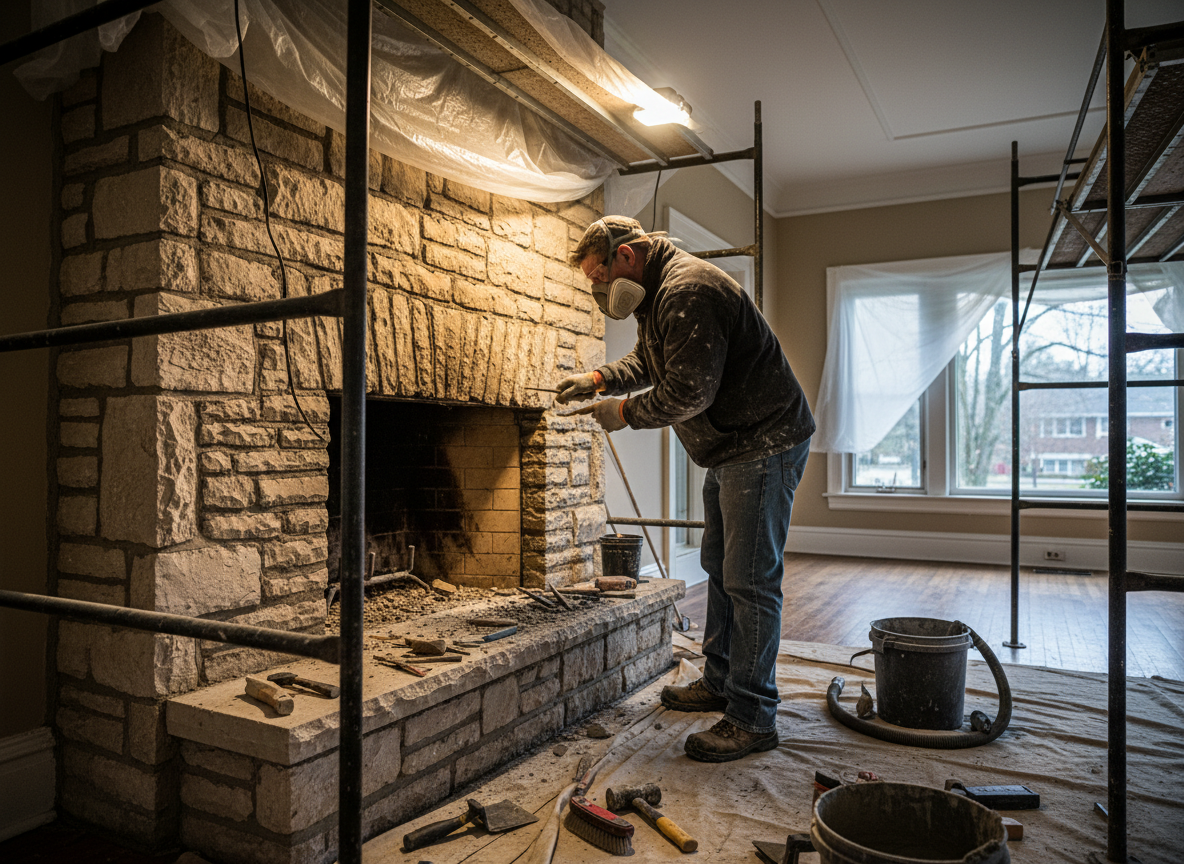
Blue Ash neighborhoods such as those near Plainfield Road and the former Blue Ash Airport site feature many 1950s to 1970s brick homes whose fireplaces were built with single-wall clay liners and lime mortar that now spalls from repeated freeze-thaw cycles. Spring rains followed by overnight freezes push water behind the brick, loosening joints and allowing creosote to migrate into living spaces. Restoration begins with removing loose material and installing new refractory panels rated to 2000 degrees rather than attempting cosmetic tuckpointing that fails within two seasons.
When the flue is compromised we insert a stainless-steel liner sized to the appliance, then repoint the exterior with Type N mortar and add a new concrete crown sloped for drainage. Homeowners often discover hidden damage only after a chimney sweep notes white efflorescence on the firebox or smoke odor in upstairs rooms. We never reuse original dampers that have warped; instead we fit cast-iron or stainless replacements that seal tightly against the smoke chamber to meet current draft requirements.
Local code enforcement in Hamilton County references NFPA 211 for clearance and liner integrity, so any restoration that alters the original opening must maintain proper hearth extension and mantel clearances. Skipping this step risks failed inspections when selling the property. We also check for asbestos in older parging before disturbing it and dispose of debris according to county rules rather than leaving it on site.
Technician insight
In Blue Ash, the thing that catches most people out with fireplace restoration is water that has already migrated behind the brick on homes built before modern flashing was standard, especially those near the golf course where spring rains sit longer on flat chimney crowns and freeze solid overnight.
Smoke Odor and Spalled Firebox in Blue Ash
Homeowner reported persistent smoke smell after burning wood through winter. Inspection showed cracked clay liner and water-damaged refractory panels. We removed the damaged material, installed a stainless-steel liner and new panels, then repointed the exterior. The fireplace now drafts cleanly with no odor.
How it works
- 1
Initial Assessment
We examine the firebox, damper, smoke chamber, and exterior masonry for cracks, spalling, and water stains while the homeowner describes recent smoke or odor issues.
- 2
Material Removal
Loose brick, failed mortar, and deteriorated refractory panels are carefully taken out without enlarging the original opening or damaging surrounding plaster.
- 3
Liner and Panel Installation
A new stainless-steel flue liner is fitted and refractory panels are set in high-temperature mortar, followed by repointing visible joints with Type N mortar.
- 4
Final Sealing and Test
The crown and flashing are sealed, the damper is replaced if needed, and a smoke test confirms proper draft before the fireplace is returned to service.
Pricing
Upfront quote provided after on-site inspection; final cost depends on liner length, panel quantity, and any crown or flashing work required.