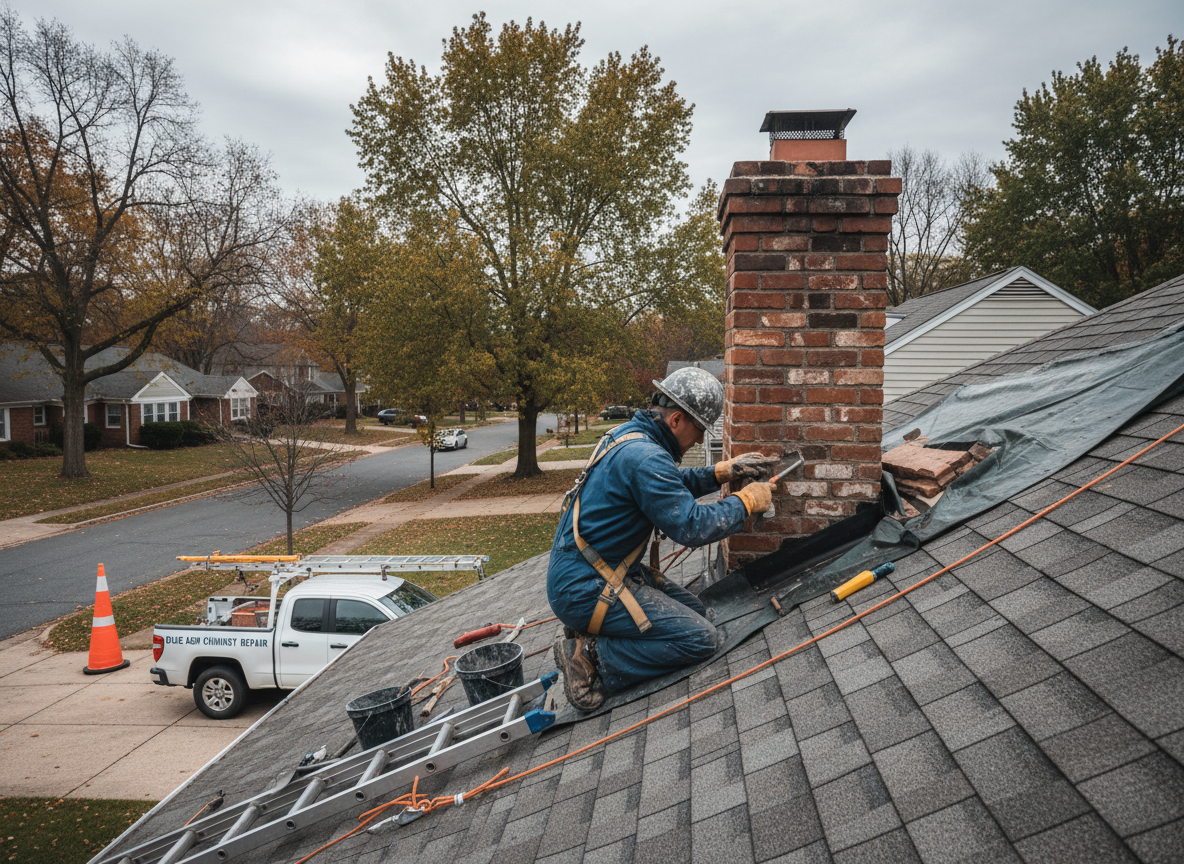
Blue Ash homes, especially those built before the 1980s in neighborhoods near Plainfield Road and surrounding Hamilton County streets, often feature masonry chimneys tied into older brick or stone construction. Emergency calls commonly arise after heavy winter freeze-thaw cycles or summer thunderstorms when water infiltrates through failed flashing or cracked crowns, allowing moisture to freeze and expand inside the flue. This can dislodge bricks or create gaps that let smoke and carbon monoxide backdraft into living spaces during the next heating cycle.
Technicians responding to these calls first secure the site by shutting down the appliance and installing temporary covers when needed. They then assess interior and exterior conditions, checking for creosote accumulation that accelerates deterioration in humid Ohio conditions and verifying that any new liner or patch meets current venting clearances around roof penetrations common on split-level and ranch homes in the area. Repairs prioritize restoring draft without full rebuilds when possible, using materials matched to existing masonry to avoid future differential movement.
Edge cases include chimneys on homes near wooded sections of Blue Ash where falling limbs during storms create sudden obstructions or cracks. Soil settlement along the glacial till common in this part of Hamilton County can also shift foundations enough to open joints at the chimney base, requiring stabilization before sealing work begins. Homeowners are advised against attempting temporary fixes with spray foam or tape, as these trap moisture and worsen hidden damage.
After hours responses focus on making the system safe immediately, often by installing a stainless steel cap or closing off the fireplace until a full inspection can occur in daylight. This approach prevents repeated service calls during peak winter months when temperatures drop and homeowners rely on fireplaces for supplemental heat.
Technician insight
In Blue Ash, the thing that catches most people out with emergency chimney repair is how quickly freeze-thaw cycles along the Little Miami River valley loosen mortar in the older brick chimneys common around neighborhoods east of Plainfield Road, turning a small crown crack into a full obstruction by mid-winter.
Storm-Damaged Chimney After High Winds
A Blue Ash homeowner called after high winds knocked loose several bricks near the crown. Inspection showed water had already entered the flue and frozen, blocking draft. We installed a temporary stainless cap to restore safe venting, removed the loose material, and scheduled a full tuckpointing visit once weather cleared. The fireplace was back in use within hours without further water intrusion.
How it works
- 1
Secure the System
Shut down the fireplace or appliance and install temporary barriers to prevent use until the emergency is resolved.
- 2
Assess Damage
Inspect the flue, crown, flashing, and surrounding masonry for cracks, water intrusion, or obstructions caused by local weather.
- 3
Perform Immediate Repair
Apply targeted fixes such as patching, capping, or clearing to restore safe venting and eliminate immediate hazards.
- 4
Verify and Document
Confirm proper draft and draft a plan for any follow-up work needed once conditions stabilize.
Pricing
Emergency calls are priced by time of response and extent of visible damage; quotes are provided before work begins.