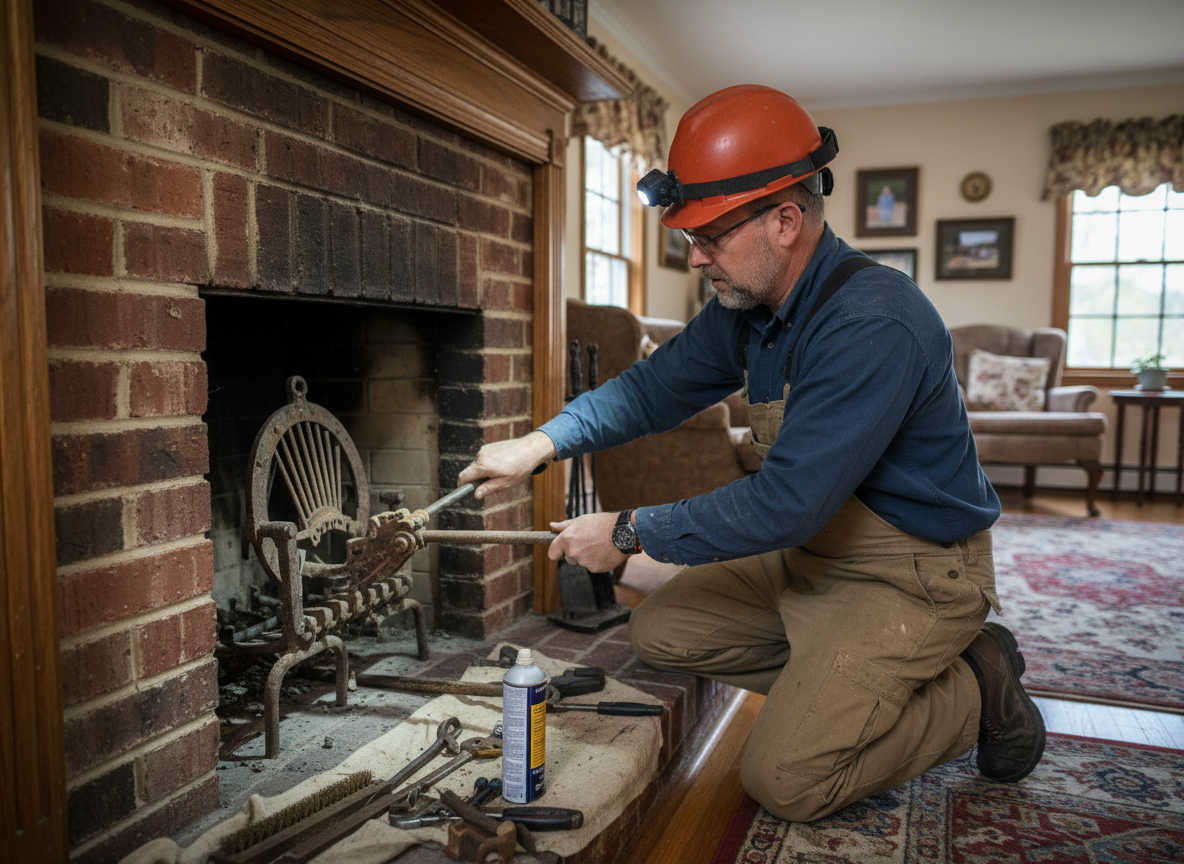
Chimney dampers in Blue Ash homes often fail from decades of seasonal cycling between freezing winters and humid summers. Older brick chimneys common along Plainfield Road and in the neighborhoods near Summit Park frequently have cast-iron or steel dampers that seize from rust or lose their seal. When the damper no longer closes tightly, conditioned air escapes and moisture enters the flue, accelerating deterioration of the masonry and liner above the roofline.
Repair work here usually begins with a top-down inspection because many Blue Ash chimneys were built with narrow flues that limit access from below. Technicians check the damper plate, pivot bar, and cable or chain mechanism for wear, then replace only the failed components rather than the entire assembly when possible. Homes built before the 1980s often have non-standard sizes, so replacement parts must be fabricated or sourced from specialty suppliers rather than big-box stock.
Homeowners sometimes attempt to free a stuck damper with spray lubricants, but these products attract soot and create future blockages. Proper repair restores full operation while preserving the existing chimney structure and avoiding unnecessary masonry work that would be required if the damper assembly were forced out.
Technician insight
In Blue Ash, the thing that catches most people out with chimney damper repair is the narrow flues in the 1960s and 1970s split-levels around Plainfield Road; you cannot always drop a new damper from inside the house and have to work from the roof, which adds time when the crown is in poor shape.
Stuck Damper on a Blue Ash Split-Level
A homeowner near 9000 Plainfield Rd reported cold drafts and difficulty opening the damper. Inspection showed the pivot bar rusted solid from years of condensation. The plate was freed, the pivot replaced with a stainless version, and the cable rerouted for smoother operation. The flue now closes fully and opens without resistance.
How it works
- 1
Initial Inspection
Technician climbs to the chimney crown and examines the damper plate, seal, and operating mechanism for corrosion, warping, or broken hardware.
- 2
Component Assessment
The damper is tested for smooth operation and proper closure; measurements are taken for any custom replacement parts needed on older Blue Ash flues.
- 3
Targeted Repair
Worn pivots, cables, or plates are replaced or rebuilt in place, restoring function without disturbing surrounding masonry.
- 4
Final Verification
The damper is cycled multiple times and checked for airtight closure before the job is complete.
Pricing
Upfront quotes provided after on-site inspection; cost depends on access, part availability, and condition of the existing assembly.