Blue Ash homes often feature brick chimneys installed decades ago that suffer from Ohio winters where repeated freeze-thaw cycles crack mortar joints and spall brick faces. Water enters through open joints near the crown and flue, then expands when temperatures drop below freezing, widening gaps that allow carbon monoxide to leak into living spaces. Repair starts with a full height inspection from the firebox to the cap, noting how roof pitch and nearby trees direct water toward the chimney on many split-level and ranch properties along Plainfield Road and surrounding streets.
Masonry work here requires matching the original brick and Type N mortar used in Hamilton County homes rather than modern mixes that expand differently and cause new cracks. We remove loose material, repoint joints, and install a new crown with proper slope and flashing integration so runoff does not pool against the brick. In cases where the flue liner has deteriorated, we discuss options for stainless steel inserts sized to the appliance before closing the job.
Homeowners in Blue Ash frequently overlook the area where the chimney passes through the attic; missing insulation or poor flashing there lets warm air rise and melt snow on the roof, creating ice dams that push water under shingles and into the brick. Addressing this during repair prevents repeated water intrusion that rots framing and stains ceilings below.
All work follows current IRC requirements for clearance to combustibles and proper termination height above the roofline, which is especially relevant on the low-slope roofs common in 1960s-1980s Blue Ash neighborhoods.
Technician insight
In Blue Ash, the thing that catches most people out with brick chimney repair is water entering at the attic level on the many low-slope roofs around Plainfield Road and then freezing inside the masonry; homeowners focus on the visible crown but miss how the freeze-thaw cycle starts higher up and travels down the flue.
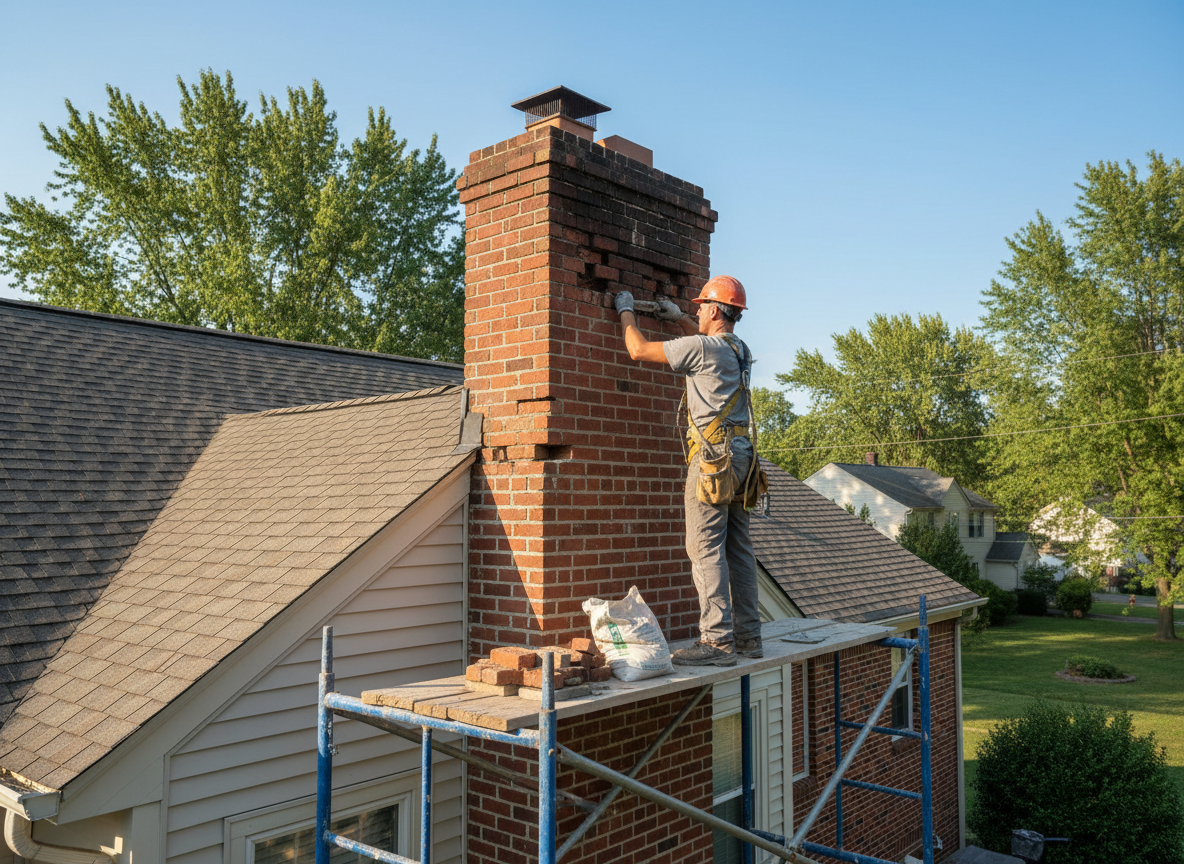
Spalled Brick on Blue Ash Chimney
A ranch home near 9000 Plainfield Rd showed cracked and spalling brick on the south face after several winters. Inspection found open mortar joints allowing water to reach the flue liner. We removed damaged brick, repointed with matching mortar, rebuilt the crown, and tied in new step flashing. The chimney now sheds water properly and the homeowner reports no further staining in the attic.
How it works
- 1
Inspection
We examine the full chimney structure from firebox to crown, checking for spalled brick, open mortar joints, and water staining in the attic.
- 2
Material Matching
Original brick and mortar type are identified so repairs blend with existing masonry on Blue Ash homes.
- 3
Repair Execution
Damaged sections are rebuilt, joints repointed, and a new crown installed with integrated flashing.
- 4
Final Check
We verify proper draft, confirm clearances, and walk through the completed work with the homeowner.
Pricing
Upfront quotes provided after on-site inspection; cost depends on height, extent of brick damage, and whether flue liner work is required.