2026-10-23 ·
Creosote Buildup Risks in Older Blue Ash Chimneys During Cold Snaps
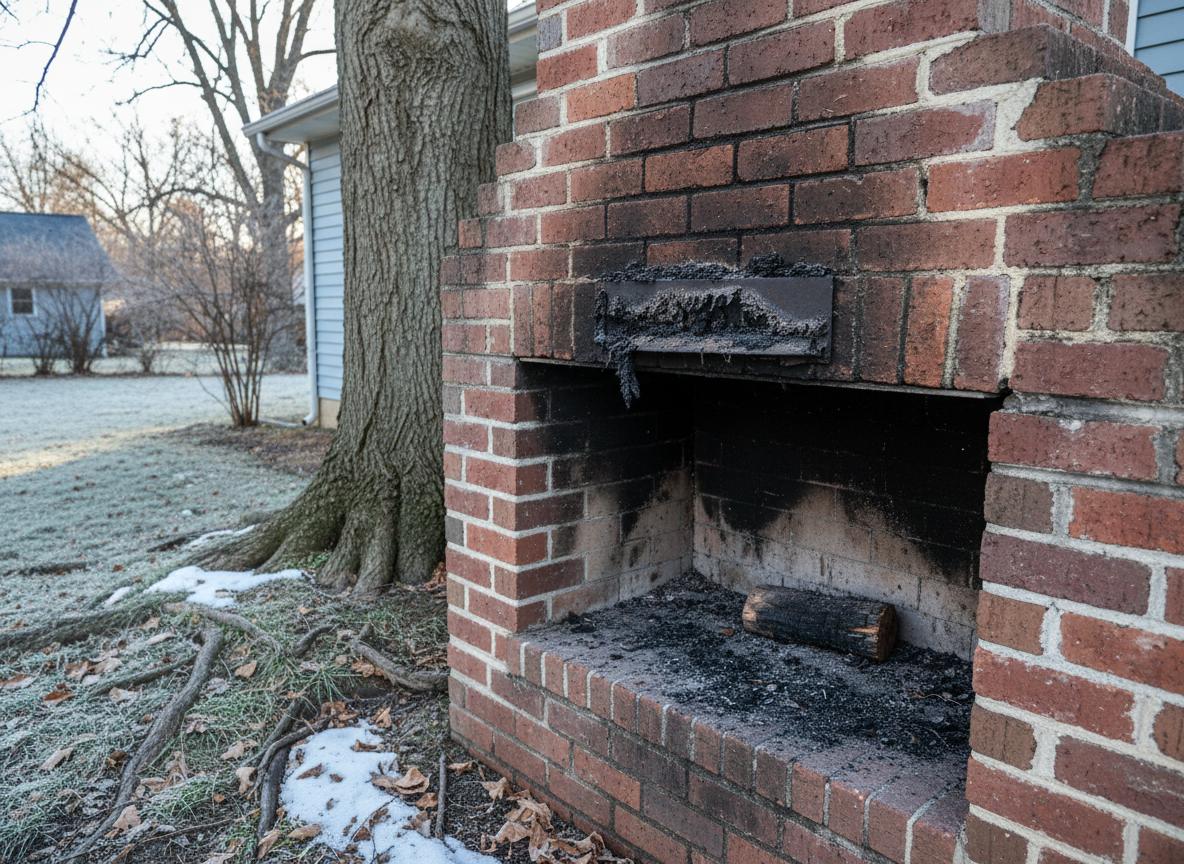
Creosote can reach dangerous 1/4-inch thickness in older Blue Ash chimneys after just 8-12 weeks of heavy winter use during cold snaps. Blue Ash homes built before 1980 often feature unlined or partially lined brick flues that retain heat poorly, allowing smoke to cool and deposit creosote faster when outside temperatures drop below freezing.
How Cold Snaps Accelerate Creosote Formation in Blue Ash
Blue Ash winters bring sudden temperature drops that force homeowners to run fires hotter and longer. When flue gases cool rapidly against cold brick walls, third-stage creosote forms as a hard, tar-like glaze that ignites at lower temperatures than softer deposits. Homes along Edwards Road and in Sycamore Township sit on slightly higher ground where wind exposure cools chimneys even faster, increasing condensation inside the flue. This pattern repeats during each cold front moving through Hamilton County, turning routine fireplace use into a compounding hazard for pre-1970 brick chimneys common throughout the area.
Why Older Blue Ash Homes Are Especially Vulnerable
Many residences in Kenwood, Montgomery and Pleasant Ridge still rely on original masonry chimneys installed when building codes allowed thinner liners or none at all. These flues often measure 8x8 or 8x12 inches and have absorbed decades of moisture from Ohio's freeze-thaw cycles, creating rough surfaces that trap creosote particles. During a cold snap, the temperature differential between a 1,200-degree fire and 20-degree outside air causes rapid condensation, locking creosote against already compromised mortar joints. Without regular intervention, this cycle repeats nightly until the deposit reaches ignition thickness.
Warning Signs of Hazardous Creosote Levels
Homeowners notice a sharp, acrid smell near the fireplace even when no fire burns. Dark, sticky residue appears on the damper or smoke shelf after only a few burns. Chimney draft weakens noticeably on windy days common in Blue Ash, forcing smoke back into living spaces. In severe cases, small sparks or popping sounds occur inside the flue during use, indicating creosote has reached the 1/4-inch stage where chimney fires become likely.
Practical Steps to Limit Buildup This Winter
Burn only seasoned hardwood that has dried at least six months to reduce moisture in smoke. Maintain fires at a steady medium burn rather than letting them smolder overnight. Schedule a chimney cleaning service before the first hard freeze and again mid-winter if daily use exceeds four hours. Consider a chimney inspection service that includes video scanning to measure actual deposit depth in older flues common to the Blue Ash area.
When Professional Relining Becomes Necessary
If inspection reveals creosote exceeding 1/8 inch or damaged flue tile, relining stops future rapid buildup. Stainless steel or cast-in-place liners restore smooth surfaces that resist condensation during cold snaps. Local data from similar homes in Deer Park and Madeira shows properly relined chimneys cut creosote accumulation by more than half compared with original masonry. Review Typical Costs for Chimney Liner Replacement Near Blue Ash Ohio to understand realistic pricing for 20- to 30-foot flues typical in the neighborhood.
Peak Wrench operates 24/7 from 9000 Plainfield Rd, Blue Ash, OH 45236 to handle urgent creosote concerns before the next cold front arrives.